
War, oil and the (unintentional) acceleration of electrification
When petrol prices rise, the case for switching does not merely improve. It becomes obvious.
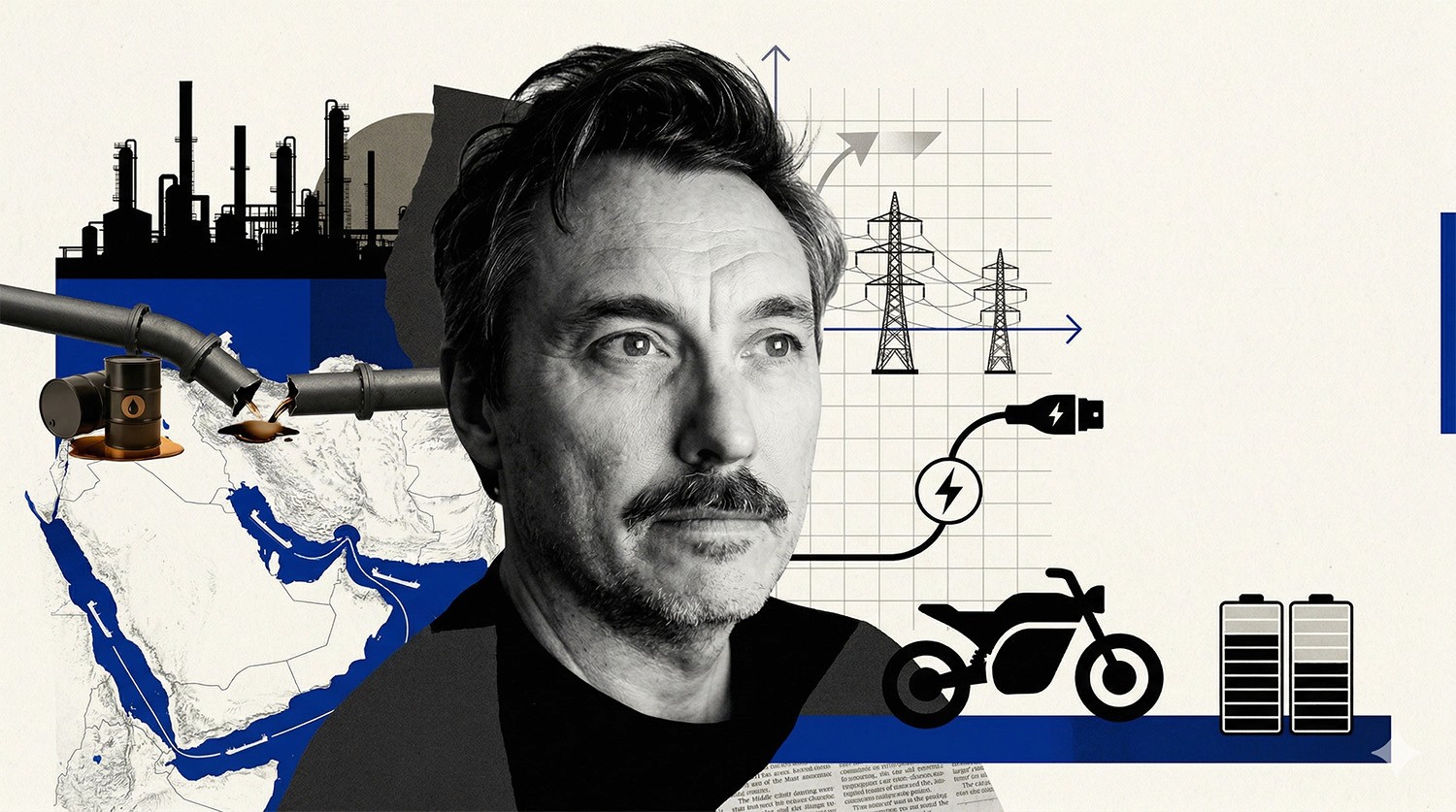
War, oil and the (unintentional) acceleration of electrification
Written by
Chief Executive Offier

Crises have a way of forcing change that politics delays. The war in Iran is doing so again: not because anyone involved wants to speed up electrification, but because rising oil prices are making dependence on fossil fuels more expensive, more visible, and harder to defend.
I have always found it uncomfortable how often meaningful structural change is driven not by foresight, but by crisis.
The war in Iran is forcing that reality into view again. Beyond its immediate and tragic human consequences, it is already rippling through the global economy in ways that feel both familiar and deeply unsettling. Oil prices have shown renewed volatility in response to escalating tensions in the region, and history suggests that even the risk of disruption in the Strait of Hormuz, through which roughly 20% of global oil supply passes, is enough to move markets sharply upward.
When geopolitics becomes inflation
This is not an abstract matter of geopolitics. It is something people experience directly, whether at the fuel pump, in rising transport costs, or in the price of ordinary goods. Oil has a unique ability to transmit shock through the entire economy, which is why disruptions travel so quickly and so broadly. The IMF has repeatedly noted that energy price shocks are among the fastest drivers of inflation across global markets.
Crisis changes behavior faster than policy
What moments like this do, however, is alter behavior in ways that years of environmental messaging and policy debate rarely manage on their own. When fuel prices rise sharply, the economics change almost overnight. During the 2022 energy crisis that followed Russia’s invasion of Ukraine, consumer interest in electric vehicles rose markedly across Europe, with some markets reporting double-digit sales growth within months, while EV-related search activity spiked in parallel.
That is not incidental. According to the IEA, global electric vehicle sales exceeded 14 million units in 2023, accounting for roughly 18% of all car sales, up from just 4% in 2020. That growth has several causes, but fuel-price volatility has consistently been one of the strongest accelerants. Studies suggest that sustained increases in petrol prices can lift EV adoption by around 10% in the short term as consumers reassess total cost of ownership.
The faster transition may happen on two wheels
What remains underappreciated is where the most immediate shift may happen. Much of the debate still centers on cars, but the faster and more consequential transition may occur in motorcycles and other two-wheelers. In Asia in particular, electric two- and three-wheelers already represent one of the most advanced segments of road transport electrification and are among the quickest ways to reduce oil demand because they are cheaper to electrify, heavily used, and highly sensitive to fuel costs.
That matters because these vehicles operate on tighter margins and are often part of everyday necessity rather than discretionary consumption. When petrol prices rise, the case for switching does not merely improve. It becomes obvious. If the goal is to reduce oil dependence quickly, two wheels may prove a more effective lever than four.
Electrification is becoming a sovereignty question
At the same time, the broader narrative around electrification is changing. For years, the shift away from fossil fuels has been framed primarily as a question of sustainability. That argument remains important, but it has never been enough on its own to drive rapid adoption. What is emerging now is a more powerful motivation: energy independence.
In a world where geopolitical tensions can disrupt supply and send prices higher within days, reducing reliance on imported oil becomes less a matter of long-term principle than of immediate resilience. Europe, in particular, has spent decades building systems dependent on external energy sources, only to be reminded repeatedly how exposed that dependence makes it.
Electrification, especially when paired with locally generated energy, does not eliminate those vulnerabilities altogether. But it does begin to shift the balance of control. The IEA projects that electric vehicles could displace more than 5 million barrels of oil per day by 2030, a structural change that would have seemed improbable at scale not long ago.
The uncomfortable paradox
There is an uncomfortable paradox at the center of all this. The acceleration now taking place is not being driven by deliberate progress, but by instability and conflict. It is difficult, and perhaps wrong, to describe any aspect of such a moment as positive when the underlying force is human suffering on a real and immediate scale.
The irony is almost brutal. None of the parties driving this moment are doing so to accelerate electrification. Especially not the United States under the current Trump administration, which has gone out of its way to attack EV policy, roll back emissions regulation, and champion fossil-fuel expansion instead. And yet that may be exactly what this crisis helps do. By reminding markets, consumers, and entire countries how exposed they remain to oil shocks, it strengthens the economic logic of moving away from oil whether Washington likes it or not.
History suggests that crises do more than produce temporary spikes in behavior. They alter the baseline. Each disruption deepens awareness of how fragile dependence can be, and each new wave of adaptation leaves behind infrastructure, habits, and expectations that do not disappear when prices retreat.
A crisis that compresses time
That is why developments like the current crisis matter beyond the immediate market reaction. You can say that they do not create the electrification trend, but they do compress time. They force decisions that might otherwise have been delayed, and in doing so accelerate a transition that was already underway. Forecasts from the IEA and institutions such as UBS now suggest that global oil demand could peak before the end of this decade, driven in large part by the continued rise of electrification.
None of this is an endorsement of the circumstances driving the shift. If anything, it is an indictment of how often societies fail to act until events leave them no choice. (Humanity... 🤦🏻)
What remains when the crisis passes
The more important question is what remains once the immediate crisis subsides. Whether this moment leaves a lasting mark will depend not only on price signals, but on whether industries, policymakers, and consumers use it to turn short-term reactions into long-term structural change.
What seems increasingly clear, however, is that energy is no longer being understood solely through the lens of cost or sustainability. It is being understood as a question of stability, control, and strategic autonomy.
And once that shift in perception takes hold, it rarely fully reverses.
TL;DR
Oil shocks expose dependence.
The war in Iran may unintentionally accelerate electrification.
Higher fuel prices change behavior faster than policy.
The shift may happen fastest on two wheels, especially in Asia.
Electrification is becoming a question of sovereignty, not just sustainability.
War, oil and the (unintentional) acceleration of electrification
When petrol prices rise, the case for switching does not merely improve. It becomes obvious.
War, oil and the (unintentional) acceleration of electrification
Written by
Chief Executive Offier
Crises have a way of forcing change that politics delays. The war in Iran is doing so again: not because anyone involved wants to speed up electrification, but because rising oil prices are making dependence on fossil fuels more expensive, more visible, and harder to defend.
I have always found it uncomfortable how often meaningful structural change is driven not by foresight, but by crisis.
The war in Iran is forcing that reality into view again. Beyond its immediate and tragic human consequences, it is already rippling through the global economy in ways that feel both familiar and deeply unsettling. Oil prices have shown renewed volatility in response to escalating tensions in the region, and history suggests that even the risk of disruption in the Strait of Hormuz, through which roughly 20% of global oil supply passes, is enough to move markets sharply upward.
When geopolitics becomes inflation
This is not an abstract matter of geopolitics. It is something people experience directly, whether at the fuel pump, in rising transport costs, or in the price of ordinary goods. Oil has a unique ability to transmit shock through the entire economy, which is why disruptions travel so quickly and so broadly. The IMF has repeatedly noted that energy price shocks are among the fastest drivers of inflation across global markets.
Crisis changes behavior faster than policy
What moments like this do, however, is alter behavior in ways that years of environmental messaging and policy debate rarely manage on their own. When fuel prices rise sharply, the economics change almost overnight. During the 2022 energy crisis that followed Russia’s invasion of Ukraine, consumer interest in electric vehicles rose markedly across Europe, with some markets reporting double-digit sales growth within months, while EV-related search activity spiked in parallel.
That is not incidental. According to the IEA, global electric vehicle sales exceeded 14 million units in 2023, accounting for roughly 18% of all car sales, up from just 4% in 2020. That growth has several causes, but fuel-price volatility has consistently been one of the strongest accelerants. Studies suggest that sustained increases in petrol prices can lift EV adoption by around 10% in the short term as consumers reassess total cost of ownership.
The faster transition may happen on two wheels
What remains underappreciated is where the most immediate shift may happen. Much of the debate still centers on cars, but the faster and more consequential transition may occur in motorcycles and other two-wheelers. In Asia in particular, electric two- and three-wheelers already represent one of the most advanced segments of road transport electrification and are among the quickest ways to reduce oil demand because they are cheaper to electrify, heavily used, and highly sensitive to fuel costs.
That matters because these vehicles operate on tighter margins and are often part of everyday necessity rather than discretionary consumption. When petrol prices rise, the case for switching does not merely improve. It becomes obvious. If the goal is to reduce oil dependence quickly, two wheels may prove a more effective lever than four.
Electrification is becoming a sovereignty question
At the same time, the broader narrative around electrification is changing. For years, the shift away from fossil fuels has been framed primarily as a question of sustainability. That argument remains important, but it has never been enough on its own to drive rapid adoption. What is emerging now is a more powerful motivation: energy independence.
In a world where geopolitical tensions can disrupt supply and send prices higher within days, reducing reliance on imported oil becomes less a matter of long-term principle than of immediate resilience. Europe, in particular, has spent decades building systems dependent on external energy sources, only to be reminded repeatedly how exposed that dependence makes it.
Electrification, especially when paired with locally generated energy, does not eliminate those vulnerabilities altogether. But it does begin to shift the balance of control. The IEA projects that electric vehicles could displace more than 5 million barrels of oil per day by 2030, a structural change that would have seemed improbable at scale not long ago.
The uncomfortable paradox
There is an uncomfortable paradox at the center of all this. The acceleration now taking place is not being driven by deliberate progress, but by instability and conflict. It is difficult, and perhaps wrong, to describe any aspect of such a moment as positive when the underlying force is human suffering on a real and immediate scale.
The irony is almost brutal. None of the parties driving this moment are doing so to accelerate electrification. Especially not the United States under the current Trump administration, which has gone out of its way to attack EV policy, roll back emissions regulation, and champion fossil-fuel expansion instead. And yet that may be exactly what this crisis helps do. By reminding markets, consumers, and entire countries how exposed they remain to oil shocks, it strengthens the economic logic of moving away from oil whether Washington likes it or not.
History suggests that crises do more than produce temporary spikes in behavior. They alter the baseline. Each disruption deepens awareness of how fragile dependence can be, and each new wave of adaptation leaves behind infrastructure, habits, and expectations that do not disappear when prices retreat.
A crisis that compresses time
That is why developments like the current crisis matter beyond the immediate market reaction. You can say that they do not create the electrification trend, but they do compress time. They force decisions that might otherwise have been delayed, and in doing so accelerate a transition that was already underway. Forecasts from the IEA and institutions such as UBS now suggest that global oil demand could peak before the end of this decade, driven in large part by the continued rise of electrification.
None of this is an endorsement of the circumstances driving the shift. If anything, it is an indictment of how often societies fail to act until events leave them no choice. (Humanity... 🤦🏻)
What remains when the crisis passes
The more important question is what remains once the immediate crisis subsides. Whether this moment leaves a lasting mark will depend not only on price signals, but on whether industries, policymakers, and consumers use it to turn short-term reactions into long-term structural change.
What seems increasingly clear, however, is that energy is no longer being understood solely through the lens of cost or sustainability. It is being understood as a question of stability, control, and strategic autonomy.
And once that shift in perception takes hold, it rarely fully reverses.
TL;DR
Oil shocks expose dependence.
The war in Iran may unintentionally accelerate electrification.
Higher fuel prices change behavior faster than policy.
The shift may happen fastest on two wheels, especially in Asia.
Electrification is becoming a question of sovereignty, not just sustainability.
War, oil and the (unintentional) acceleration of electrification
When petrol prices rise, the case for switching does not merely improve. It becomes obvious.
War, oil and the (unintentional) acceleration of electrification
Written by
Chief Executive Offier
Crises have a way of forcing change that politics delays. The war in Iran is doing so again: not because anyone involved wants to speed up electrification, but because rising oil prices are making dependence on fossil fuels more expensive, more visible, and harder to defend.
I have always found it uncomfortable how often meaningful structural change is driven not by foresight, but by crisis.
The war in Iran is forcing that reality into view again. Beyond its immediate and tragic human consequences, it is already rippling through the global economy in ways that feel both familiar and deeply unsettling. Oil prices have shown renewed volatility in response to escalating tensions in the region, and history suggests that even the risk of disruption in the Strait of Hormuz, through which roughly 20% of global oil supply passes, is enough to move markets sharply upward.
When geopolitics becomes inflation
This is not an abstract matter of geopolitics. It is something people experience directly, whether at the fuel pump, in rising transport costs, or in the price of ordinary goods. Oil has a unique ability to transmit shock through the entire economy, which is why disruptions travel so quickly and so broadly. The IMF has repeatedly noted that energy price shocks are among the fastest drivers of inflation across global markets.
Crisis changes behavior faster than policy
What moments like this do, however, is alter behavior in ways that years of environmental messaging and policy debate rarely manage on their own. When fuel prices rise sharply, the economics change almost overnight. During the 2022 energy crisis that followed Russia’s invasion of Ukraine, consumer interest in electric vehicles rose markedly across Europe, with some markets reporting double-digit sales growth within months, while EV-related search activity spiked in parallel.
That is not incidental. According to the IEA, global electric vehicle sales exceeded 14 million units in 2023, accounting for roughly 18% of all car sales, up from just 4% in 2020. That growth has several causes, but fuel-price volatility has consistently been one of the strongest accelerants. Studies suggest that sustained increases in petrol prices can lift EV adoption by around 10% in the short term as consumers reassess total cost of ownership.
The faster transition may happen on two wheels
What remains underappreciated is where the most immediate shift may happen. Much of the debate still centers on cars, but the faster and more consequential transition may occur in motorcycles and other two-wheelers. In Asia in particular, electric two- and three-wheelers already represent one of the most advanced segments of road transport electrification and are among the quickest ways to reduce oil demand because they are cheaper to electrify, heavily used, and highly sensitive to fuel costs.
That matters because these vehicles operate on tighter margins and are often part of everyday necessity rather than discretionary consumption. When petrol prices rise, the case for switching does not merely improve. It becomes obvious. If the goal is to reduce oil dependence quickly, two wheels may prove a more effective lever than four.
Electrification is becoming a sovereignty question
At the same time, the broader narrative around electrification is changing. For years, the shift away from fossil fuels has been framed primarily as a question of sustainability. That argument remains important, but it has never been enough on its own to drive rapid adoption. What is emerging now is a more powerful motivation: energy independence.
In a world where geopolitical tensions can disrupt supply and send prices higher within days, reducing reliance on imported oil becomes less a matter of long-term principle than of immediate resilience. Europe, in particular, has spent decades building systems dependent on external energy sources, only to be reminded repeatedly how exposed that dependence makes it.
Electrification, especially when paired with locally generated energy, does not eliminate those vulnerabilities altogether. But it does begin to shift the balance of control. The IEA projects that electric vehicles could displace more than 5 million barrels of oil per day by 2030, a structural change that would have seemed improbable at scale not long ago.
The uncomfortable paradox
There is an uncomfortable paradox at the center of all this. The acceleration now taking place is not being driven by deliberate progress, but by instability and conflict. It is difficult, and perhaps wrong, to describe any aspect of such a moment as positive when the underlying force is human suffering on a real and immediate scale.
The irony is almost brutal. None of the parties driving this moment are doing so to accelerate electrification. Especially not the United States under the current Trump administration, which has gone out of its way to attack EV policy, roll back emissions regulation, and champion fossil-fuel expansion instead. And yet that may be exactly what this crisis helps do. By reminding markets, consumers, and entire countries how exposed they remain to oil shocks, it strengthens the economic logic of moving away from oil whether Washington likes it or not.
History suggests that crises do more than produce temporary spikes in behavior. They alter the baseline. Each disruption deepens awareness of how fragile dependence can be, and each new wave of adaptation leaves behind infrastructure, habits, and expectations that do not disappear when prices retreat.
A crisis that compresses time
That is why developments like the current crisis matter beyond the immediate market reaction. You can say that they do not create the electrification trend, but they do compress time. They force decisions that might otherwise have been delayed, and in doing so accelerate a transition that was already underway. Forecasts from the IEA and institutions such as UBS now suggest that global oil demand could peak before the end of this decade, driven in large part by the continued rise of electrification.
None of this is an endorsement of the circumstances driving the shift. If anything, it is an indictment of how often societies fail to act until events leave them no choice. (Humanity... 🤦🏻)
What remains when the crisis passes
The more important question is what remains once the immediate crisis subsides. Whether this moment leaves a lasting mark will depend not only on price signals, but on whether industries, policymakers, and consumers use it to turn short-term reactions into long-term structural change.
What seems increasingly clear, however, is that energy is no longer being understood solely through the lens of cost or sustainability. It is being understood as a question of stability, control, and strategic autonomy.
And once that shift in perception takes hold, it rarely fully reverses.
TL;DR
Oil shocks expose dependence.
The war in Iran may unintentionally accelerate electrification.
Higher fuel prices change behavior faster than policy.
The shift may happen fastest on two wheels, especially in Asia.
Electrification is becoming a question of sovereignty, not just sustainability.

We build what powers the shift.
Infrastructure for iconic electric machines.
Building and scaling electric infrastructure across brands, distribution and service.

We build what powers the shift.
Infrastructure for iconic electric machines.
Building and scaling electric infrastructure across brands, distribution and service.
We build what powers the shift.
Infrastructure for iconic electric machines.
Building and scaling electric infrastructure across brands, distribution and service.